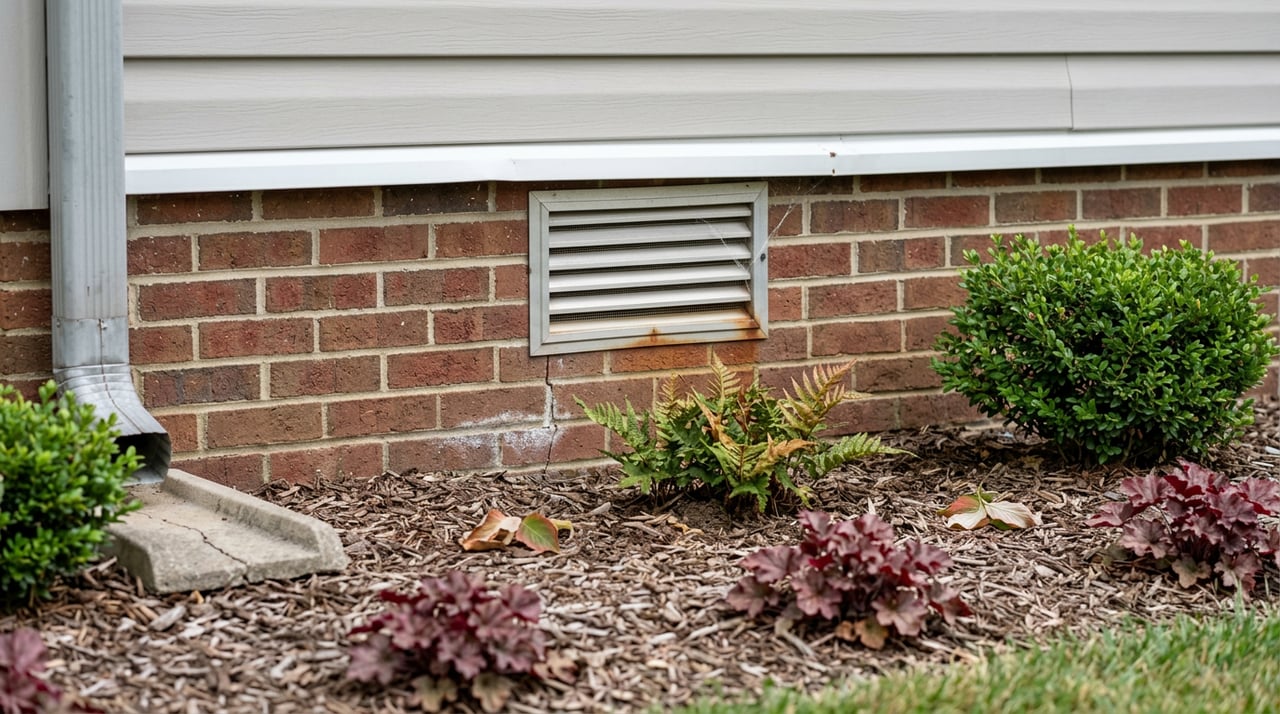
Most buyers assume the seller's disclosure form is where they learn what's actually wrong with a house. In Jackson, that assumption can cost you information you needed two weeks earlier than you got it.
Tennessee gives sellers a choice most buyers never think to ask about. A seller can fill out the full Property Condition Disclosure Statement, walking through the roof, the plumbing, the foundation, everything they know. Or they can sign a Property Condition Disclaimer instead, making no representations at all, as long as the buyer agrees to it in the contract. Both are legal. Both show up on Jackson closings every month. The form that's supposed to tell a buyer what's wrong with a house can, within the law, say almost nothing. The document that actually does that job usually arrives a few days later, when an inspector pulls open a crawl space access panel on a house sitting on West Tennessee clay.
The Disclosure Form Has an Opt-Out, and It Tends to Show Up on the Homes You'd Most Want It On
The disclaimer path exists for good reasons. A seller who inherited a house, or has only owned it a short time, may genuinely not know its history well enough to disclose in detail. But the incentive runs the other way too. A seller who knows a house has had crawl space moisture, a past foundation repair, or a slow leak that never got fully resolved has more reason to reach for the disclaimer than a seller whose house has none of that history. Filling out the full statement means writing it down. Signing the disclaimer means not having to.
That matters more in Jackson than it would somewhere with different ground under it. Middle and West Tennessee's clay-heavy soil expands when it's saturated and shrinks when it dries, which is exactly the kind of slow-motion movement that produces the crawl space and foundation issues that show up decade after decade in older homes here. Those are the same homes where a disclaimer is most useful to a seller and least useful to a buyer who's trying to plan a budget.
What the Law Still Makes Them Say, Disclaimer or Not
The disclaimer doesn't erase every obligation. Tennessee's Residential Property Disclosure Act carves out a short list of items sellers have to disclose no matter which path they take, and it's worth knowing what's on it before you assume the paperwork covers everything:
- Any known exterior injection wells on the property
- Results of percolation tests or soil absorption rates conducted for the county
- Any known foundation relocations
- Any identified sinkholes
That list comes directly from the standard Tennessee purchase agreement paperwork built around T.C.A. §66-5-212, and it applies regardless of whether the seller chose the full disclosure statement or the disclaimer. Homes built before 1978 also carry a separate federal requirement to disclose known lead-based paint hazards, no matter which state form the seller signs. And a seller can't legally advertise more bedrooms than a home's septic permit allows, a narrow rule that mostly matters on older homes in the county rather than in the city sewer system.
None of that touches crawl space moisture, foundation cracking, or termite history unless it happens to overlap with one of those specific categories. That gap is exactly where the inspection period earns its keep.
Then the Crawl Space Access Panel Opens
Jackson sits on soil that local foundation crews deal with constantly. Clay-rich ground in and around Jackson retains water, which is why crawl spaces here flood during heavy rain more than a buyer moving from sandier soil might expect. Frontier Foundation & Crawl Space Repair, which keeps an office on North Liberty Street in Jackson, has documented enough local jobs involving sagging crawl space floors and sump pump installs on Jackson homes that the pattern isn't a one-off. It's a known feature of building here.
Not every crack an inspector points to means the same thing, and this is where a buyer's read on the report matters as much as the report itself. A hairline vertical crack that's stable and doesn't run through both interior and exterior walls is usually just cosmetic settling, the kind nearly every older home in clay soil develops over time. A horizontal crack, or one where you can see the wall has shifted on one side relative to the other, is a different conversation entirely.
| What the inspector notes | What it usually means locally | What tends to happen next |
|---|---|---|
| Hairline vertical crack, stable | Ordinary settling in clay soil | Logged in the report, rarely negotiated |
| Stair-step cracking in brick veneer | Often cosmetic settling, sometimes early structural movement | Second opinion from a structural engineer before anyone talks numbers |
| Horizontal crack or visible wall displacement | Hydrostatic pressure from saturated clay pushing against the foundation | Engineer evaluation, then a credit or price adjustment |
A termite or wood-destroying organism inspection runs on a separate track from the general home inspection, and most lenders require one before they'll clear a loan to close. Companies like Golden Circle Exterminators and HTP Termite and Pest Control work Jackson regularly enough that either a buyer's inspector or a seller doing pre-listing prep can usually get one scheduled inside the standard contingency window.
The Fourteen Days That Actually Decide the Sale
Tennessee's standard purchase agreement gives buyers an inspection period, typically running seven to fourteen days from contract acceptance. Everything that matters happens inside that window. Once the report lands, a buyer generally has five paths available:
- Accept the house as it is and move forward with no changes.
- Ask the seller to complete specific repairs before closing.
- Ask for a price reduction instead of repairs.
- Ask for a credit at closing so the buyer can hire the contractor of their choice after taking ownership.
- Terminate the contract and get the earnest money back, as long as it happens before the contingency deadline.
The negotiation itself moves fast. Tennessee agents train on scenarios where the back-and-forth over a repair request is expected to resolve in a matter of days, not weeks, once a formal repair proposal goes out. If a buyer wants a structural engineer's opinion on a questionable crack, that appointment needs to happen early in the window, not on day twelve.
Why the Credit Usually Wins in Jackson
Here's the part that surprises people who haven't been through a Tennessee closing before. When a Jackson inspection turns up something real, sellers and buyers overwhelmingly settle it with a check at closing rather than a contractor showing up before the sale.
The logic holds up once you look at who's actually deciding. A seller doesn't want to hand control of the closing timeline to a repair company they didn't choose, especially on crawl space or foundation work where a second problem can surface mid-repair and blow past the closing date. A buyer, for their part, usually wants the choice of contractor once the house is theirs. A repair mandated during the sale often gets the minimum fix that satisfies the contract language. A credit lets the new owner call Frontier, or whichever crawl space specialist they trust, and pay for the level of encapsulation or drainage work they actually want rather than the cheapest version that gets the deal closed.
That's the piece worth remembering before you ever get to the negotiation table. The disclosure form tells you what Tennessee law requires a seller to admit. The crawl space tells you what the clay under Jackson has actually done to the house. And the closing credit is how most buyers and sellers here end up splitting the difference between the two.
A Few Questions Worth Settling Before You're Under Contract
Does the as-is disclaimer let a seller hide a known problem? No. Even with a disclaimer, Tennessee law still requires disclosure of sinkholes, foundation relocations, percolation test results, and exterior injection wells, and knowingly concealing a defect outside that framework can still expose a seller to a lawsuit.
Is the termite inspection included with the general home inspection? Usually not. It's a separate wood-destroying organism inspection, and most lenders require one before they'll clear a loan for closing.
What if fourteen days isn't enough time to get a structural engineer scheduled? A buyer can ask to extend the inspection period, but the seller isn't obligated to agree. Booking any specialist inspection, crawl space or structural, the moment the contract is signed protects the timeline rather than the other way around.
Whether you're preparing to list a Jackson home that's had some history with its crawl space, or you're under contract and staring down a report full of terms you didn't expect, the paperwork only tells part of the story. Amy McLemore has spent years walking Jackson buyers and sellers through exactly this moment, matching what an inspection finds with what it actually means for your price and your timeline. Request a Free Home Valuation to start the conversation before the clock on your inspection period starts running.